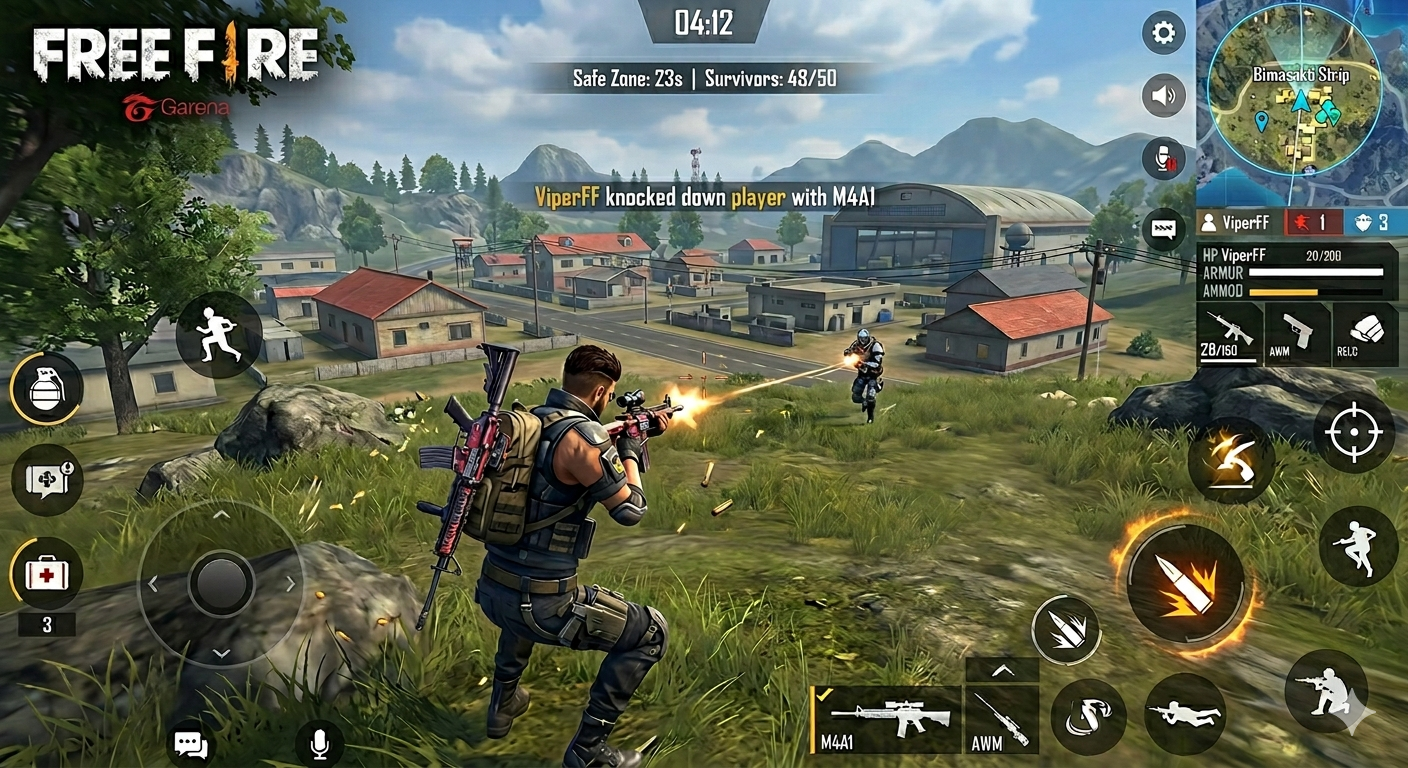
In fast-paced battle royale games, quick reflexes and sharp aim matter—but they’re not the only things that decide the outcome. In Free Fire, one of the most interesting layers of gameplay comes from how players combine character skills to suit their style. It’s a system that rewards thoughtful choices rather than flashy promises, allowing players to experiment, adapt, and discover what works best for them.
Instead of relying on a single “perfect” setup, Free Fire encourages players to explore combinations that complement their strengths. The result? A gameplay experience that feels dynamic, personal, and constantly evolving.
Understanding the Role of Character Skills
Every character in Free Fire comes with a unique ability. Some skills focus on improving movement, while others enhance survivability, awareness, or combat efficiency. On their own, these abilities are useful—but when combined, they can create interesting synergies that shape how you approach the game.
The key is to think of skills as tools rather than shortcuts. They don’t guarantee victory, but they can support better decision-making. For example, pairing a defensive skill with one that improves mobility can help you survive longer in unpredictable situations. It’s not about overpowering the game—it’s about understanding it.
Building Combinations Around Your Playstyle
One of the reasons skill combinations feel so engaging is that they allow you to play the game your way. There’s no universal formula that works for everyone. Instead, your choices depend on how you like to approach each match. If you prefer an aggressive style, you might lean toward skills that support quick engagements and faster recovery. Players who enjoy a more cautious approach may choose abilities that improve awareness or provide subtle defensive advantages.
What matters most is consistency. When your skill setup aligns with your natural instincts, your decisions become smoother and more confident.
The Balance Between Offense and Defense
A common mistake is focusing entirely on offense or defense without considering balance. While it might be tempting to stack aggressive abilities, doing so can leave you vulnerable in situations where survival becomes more important than combat. On the other hand, relying too heavily on defensive skills might limit your ability to take opportunities when they arise.
A well-rounded combination often includes a mix of both. For instance, pairing a movement-enhancing skill with one that offers situational protection can help you adapt to different scenarios during a match. The goal isn’t to cover everything—it’s to stay flexible.
Adapting to Different Game Modes
Free Fire offers a variety of modes, and each one presents its own challenges. A combination that feels effective in one mode may not perform the same way in another. In shorter, faster-paced modes, players often benefit from skills that activate quickly and support immediate action. In longer matches, abilities that provide sustained value over time can become more useful.
This is where experimentation becomes important. Trying different setups across modes helps you understand how each skill behaves in different contexts. Over time, you’ll develop a sense of which combinations feel reliable in specific situations.
The Importance of Subtle Advantages
Not every skill needs to be dramatic to be effective. In fact, some of the most valuable combinations are built around subtle advantages—small improvements that add up over time. A slight boost in movement speed, a bit more awareness, or a small defensive edge might not seem significant in isolation. But when combined thoughtfully, these elements can influence positioning, timing, and decision-making in meaningful ways.
Free Fire’s design rewards players who pay attention to these details. It’s less about big moments and more about consistent performance throughout the match.
Team Play and Complementary Roles
When playing in squads, character skill combinations take on a new dimension. Instead of focusing only on your own setup, you can think about how your skills complement your teammates.
For example, one player might focus on providing support, while another prioritizes mobility or engagement. This creates a balanced team dynamic where each player contributes in a different way. Communication becomes key here. Even simple coordination—like deciding who takes on which role—can make a noticeable difference in how smoothly a match unfolds.
It’s a reminder that Free Fire isn’t just about individual skill; it’s also about teamwork.
Experimentation as Part of the Experience
One of the most enjoyable aspects of character skill combinations is the freedom to experiment. There’s no pressure to stick with a single setup forever. In fact, trying new combinations can keep the game feeling fresh and engaging. You might discover that a combination you hadn’t considered before actually suits your playstyle better than your usual setup. Or you might find that small adjustments lead to more consistent results.
This trial-and-error process is part of what makes the system interesting. It encourages curiosity and rewards players who are willing to explore different approaches.
Avoiding the “Perfect Build” Mindset
It’s easy to fall into the trap of searching for the “best” combination. But in a game as dynamic as Free Fire, that idea doesn’t really hold up. What works well in one situation might not work the same way in another. Instead of chasing perfection, it’s more helpful to focus on adaptability. A good combination is one that supports your decisions and helps you respond to changing circumstances.
This mindset not only improves your gameplay but also makes the experience more enjoyable. You’re no longer trying to follow a fixed formula—you’re learning, adjusting, and growing with each match.
Learning Through Gameplay
Every match in Free Fire offers valuable lessons, helping players refine strategies through consistent gameplay experience:
- Observing outcomes after each match helps players understand which character skill combinations feel more effective.
- Repeating different scenarios allows players to recognize patterns and improve decision-making during high-pressure gameplay situations.
- Small adjustments to skill setups can gradually lead to more consistent performance across various matches played.
- Watching teammates and opponents provides insights into alternative strategies and how different abilities influence gameplay flow.
- Learning from mistakes encourages players to adapt, improving both awareness and overall understanding of in-game mechanics.
Over time, experience builds confidence, helping players make smarter choices and enjoy more balanced gameplay overall.
Final Thoughts
Character skill combinations in Free Fire add a thoughtful layer to an already fast-paced game. They give players the freedom to shape their experience, experiment with different approaches, and develop their own style over time. There’s no shortcut to mastering them, and that’s what makes the journey worthwhile. Each match becomes an opportunity to refine your choices, understand the game better, and enjoy the process. In the end, it’s not about finding the strongest combination—it’s about finding the one that feels right for you.